The EAR Project Team
Academy of Fine Arts of Rome (ABAROMA)

The Academy of Fine Arts of Rome is a leading institution for higher education and research in the field of visual arts. It promotes the study, transmission, and advancement of contemporary creative expression, while fostering the cosmopolitan role of both the city and the Academy itself through the development of cultural exchange networks aimed at mutual artistic and cultural growth.
With roots tracing back to the historic art workshops and Renaissance academies—particularly the Accademia di San Luca—the Academy is committed to preserving traditional artistic methodologies while also advancing research and the application of new techniques and technologies. These efforts aim to enrich its educational offerings, both in formative and creative terms.
The Academy’s academic programmes are organized across three Departments—Visual Arts, Design and Applied Arts, and Art Communication and Education—and include ten Schools: Painting, Sculpture, Decoration, Printmaking, Scenography, Artistic Design for Business, New Technologies for Art, Communication and Promotion of Contemporary Artistic Heritage, Art Education, and Cinema, Photography and Audiovisual Arts.
Project Manager WP1
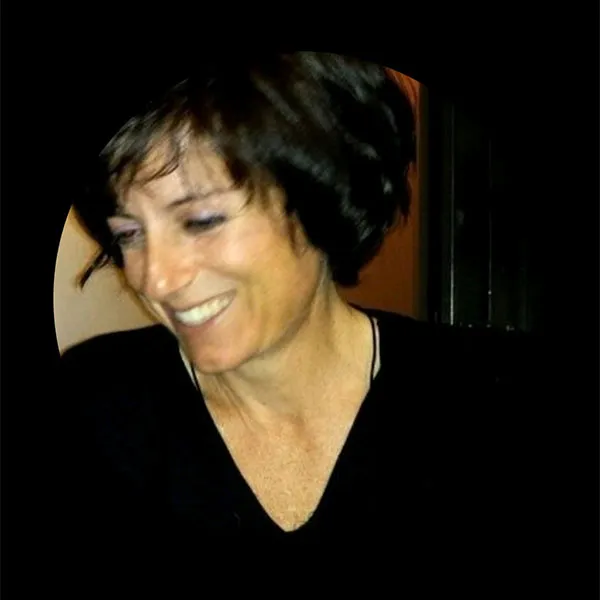
After graduating with honors in Business Administration from Bocconi University in Milan, Arianna Angelini began her career at Procter & Gamble, where she had the opportunity to work in various international offices and take on roles of increasing responsibility, including an executive position starting in 2006. Throughout her career, she worked in diverse markets including Italy, Western Europe, CEEMEA, the USA, Asia, India, and Australia. With over 20 years of experience in sales and business development, marked by a strong passion for people management, in 2018 she embraced a new challenge in the public sector, joining the MUR AFAM as an administrative-accounting officer. There, she integrates her corporate management experience with the mission of improving efficiency in public education within the AFAM sector.
Scientific Coordinator of the Project
WP1 Coordinator
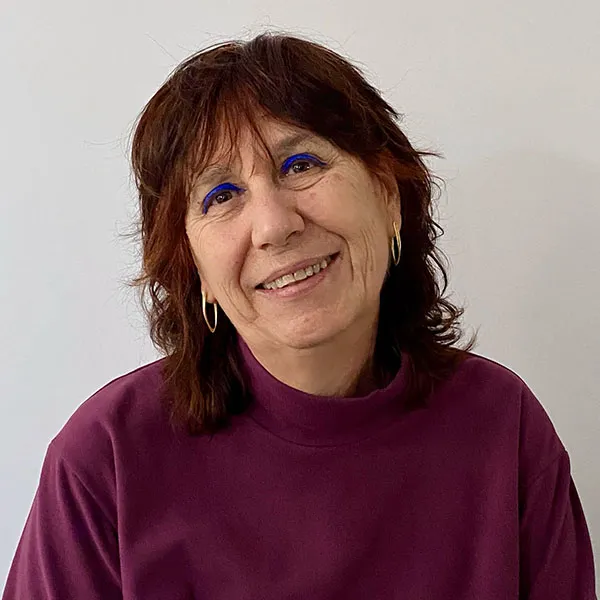
Beatrice Peria is an art historian with a background in iconology. She has published scholarly studies on the iconography of 16th-century Venetian art, the relationship between word and image, 19th-century Italian and French painting, and artist books. She has collaborated with Il Trovaroma – La Repubblica, RAI’s Education Department, ICCD, and the Molise Superintendency. Since 1989, she has been a tenured professor of Art History at ABA Roma, where she also serves as Head of International Relations. She is an ANVUR system expert, evaluator, and Erasmus Coordinator for over 15 years. She was on the steering committee of the EU4ART (European Universities) and EU4ART_differences (Horizon2020) projects.
Her recent publications include La prospettiva invisibile. Forme visuali della temporalità dell’arte (2022), and essays on Degas and the Vanitas series.
Project Assistant WP1
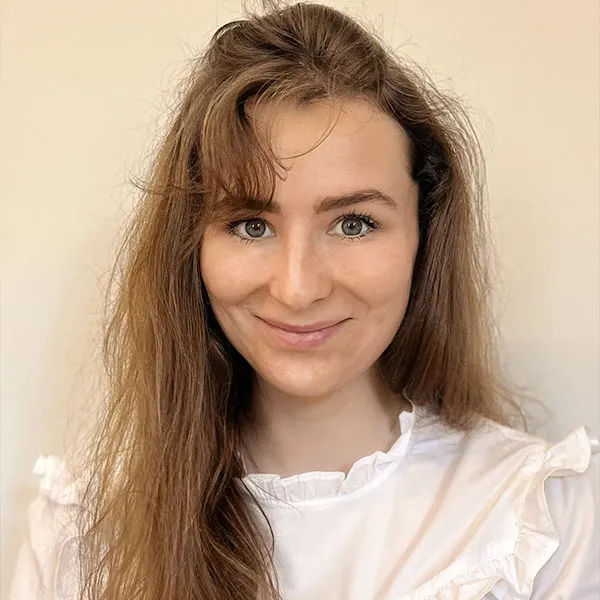
Angelica Speroni is a researcher at Université Paris 8, where she earned her PhD in Aesthetics, Sciences, and Technologies of the Arts in 2024. She is curator of the Lucia Romualdi Archive and adjunct faculty at ABA Roma for courses in Exhibition Design and Visual Communication (since 2022), previously Aesthetics (2019–2021). Between 2020 and 2023, she worked on the EU4ART project and has taught at Europass Teacher Academy within Erasmus+ since 2023.
She authored and presented at MAXXI in Rome her monograph Raggiungere l’orizzonte (2024).
She has presented at major conferences such as DIMMI (Trento 2024) and CIM (Turin 2024), and curated exhibitions in venues such as Palazzo Venezia, Zisa, Ajutamicristo, Sala Colleoni, and ABA Roma.
WP2 Coordinator
Costanza Barbieri is a professor of Early Modern Art and Drawing History at ABA Roma and a curator of national and international exhibitions from the Renaissance to Modern Art. With two PhDs (Sapienza University of Rome and Rutgers University), she has authored nearly 100 publications on Renaissance visual culture, collecting, contextual iconology, and non-invasive diagnostics.
She participated in EU4ART_differences (Horizon2020), and is on the doctoral board of the National PhD in Visual Arts (Tor Vergata), with a focus on New Technologies for Cultural Heritage. Recent publications include Gli astri benigni di Agostino Chigi. Peruzzi, Sebastiano e Raffaello nella Loggia della Galatea (2023).
Project Assistant WP2
Enrolled in the MA in Art History at Roma Tre University since October 2024, Noemi graduated with honors from ABA Roma in Communication and Enhancement of Contemporary Art Heritage.
Her academic focus is on cultural heritage conservation, particularly non-invasive diagnostic techniques, with experience in IR reflectography, XRF, laser profilometry, and UV fluorescence.
In February 2024, she was part of a research team investigating the Spasimo di Sicilia, a copy of Raphael, in collaboration with INFN Roma. This research was the subject of her diploma thesis and was presented at the seminar Research and Development at DAΦNE-L and LASR3 Laboratories.
Expert WP2
Roberto Bellucci is a conservator and restorer who, since 1974, has worked on paintings at the Opificio delle Pietre Dure in Florence, where he still collaborates. He is an Honorary Academician of the Accademia delle Arti del Disegno (Florence), an associate of CNR-INO, and was a member of the scientific committee for the restoration of Leonardo da Vinci’s La Belle Ferronière at the Louvre.
Author of over 100 scientific articles on conservation and technical issues, he specializes in non-destructive testing, aqueous cleaning methods, and scientific analysis techniques of artworks. He is a leading expert on underdrawing and medieval/renaissance painting techniques, having conducted extensive research on Masaccio, Masolino, Piero della Francesca, Botticelli, Sebastiano del Piombo, Leonardo, among others. He has lectured at institutions such as the Met (NYC), Louvre, National Gallery (London), Kunsthistorisches Institut (Florence), and Yale Conservation Center.
Within the EAR project, he serves as a diagnostic investigation expert.
PhD Student WP2–WP4
Flavia Coccioletti, born in Rome, studied at the Academy of Fine Arts of Rome, where she earned a second-level diploma in Art Education and Communication with a curatorial focus. In 2022, she started a PhD in Cultural Heritage Sciences, focusing her research on museum accessibility for blind and partially sighted people. As part of her PhD, she participates in the PNRR project “MAXXI per TUTTI” at the MAXXI Museum in Rome, actively collaborating with the working group on visual disabilities. She is also a volunteer for the association MUSEUM, through which she promotes cultural activities aimed at people with visual impairments. Within the EAR project, she contributed to the realization of the project Tiziano Tangibile. La Pala Gozzi.
Expert WP2
Certified restorer at the ICR in Rome and art historian (La Sapienza), Lorenza D’Alessandro has worked as a freelance professional since 1984 for public and private institutions in Italy and abroad.
Specialized in the conservation of paintings and stone materials, she has restored significant works ranging from archaeology to contemporary art. Since 1986, she has taught at institutions such as ICCROM, Indiana University, and Trinity College Rome, and is currently a professor at the University of Tuscia.
Within the EAR project, she focuses on conservation and restoration, particularly on the creative genesis in artworks and the peculiarities of painting copies.
Expert WP2
Maria Beatrice De Ruggieri holds a PhD in Art History (Sapienza and University of Siena). Her research explores artistic processes through diagnostics and technical sources. She co-founded Emmebi Diagnostica Artistica and has worked extensively on 17th-century Roman and Neapolitan painting, especially Caravaggio and the Baroque.
She has collaborated with international institutions (Kunsthistorisches Museum, Prado, Stockholm University), and taught at Sapienza, Tuscia, Valencia, Stockholm, and currently teaches at Roma Tre.
In the EAR project, she researches compositional processes in 17th-century painting with a focus on diagnostics.
Expert WP2
With a degree in Art History (University of Florence), Cecilia Frosinini worked as a senior art historian at the Opificio delle Pietre Dure (1990–2021). She has held fellowships at CASVA (National Gallery of Art, Washington, D.C.) and teaches at Catholic University Milan, University of Pisa, and University of Florence.
She has served on international scientific committees and for the restoration of Leonardo’s Saint Anne at the Louvre, and is currently on the Uffizi Scientific Committee.
Her research focuses on underdrawing techniques and scientific investigation methods, with over 200 publications. In the EAR project, she acts as an art historian expert, selecting artworks to illustrate the phases from concept to creation.
Expert WP2
Daniela Luzi earned diplomas in Painting Conservation and Stone Materials Conservation from the Central Institute for Restoration (Rome). In 1986, she founded L’ERRE Consorzio, where she serves as President and Technical Director, working on major mural and architectural restoration projects.
Her notable work includes the pilot intervention on the facade of the Scrovegni Chapel (Padua) and restorations in San Zeno (Verona) and San Carlino alle Quattro Fontane (Rome), recovering Borrominian finishes.
In the EAR project, she contributes case studies exemplifying key phases in the creative process and experimentation with materials and techniques.
WP3 Coordinator
Franco Ripa di Meana works in the performing arts, particularly in opera direction and multimedia performance. He has been an actor (with Gaia Scienza by G.B. Corsetti), assistant director (in major Italian and European theatres and festivals), associate director (with Luca Ronconi and Graham Vick), director (over forty productions, including many world premieres), producer (founder of Italy’s first touring opera company, OPERAOGGI), and librettist (Tempo sospeso del volo, music by Nicola Sani).
He has over twenty years of teaching experience (IUAV, Scuola dell’Opera Italiana, Maggio Formazione, Academies of Carrara, Turin, Brera), guiding students in producing performances such as Dido & Aeneas, Donna non rieducabile, The Prague and The Milan Experiment, and Il nemico ritrovato.
He coordinated WP4 of the EU4ART_differences project (Horizon2020) and is a member of the Management Committee for COST Action 23158 – ARTinRARE.
Research Fellow WP3
PhD in Art Theory and Art History from Peking University, Veronica Di Geronimo holds degrees in Art History and Contemporary Art History from Sapienza University of Rome. She curated the exhibition Syncretisms: Dao between East and West at Lo Studiolo and worked at the National Gallery of Modern and Contemporary Art in Rome.
In 2022–2023, she served as Junior Scientist at ABA Roma for EU4ART_differences (Horizon2020), where she is currently a postdoctoral researcher.
In the EAR project, she focuses on theoretical and methodological aspects of artistic research, particularly the application of artificial intelligence.
Research Fellow WP3
Andrea Guidi is a researcher in computational creativity and human-machine interaction, with a PhD in Media and Arts Technology from Queen Mary University of London. As a musician and artist, he has exhibited and performed at international media art festivals, including two editions of Ars Electronica (Linz). He is also an alumni member of the Augmented Instruments Lab at Imperial College London.
In the EAR project, he develops AI-supported teaching strategies aimed at fostering innovation and experimentation in fine arts academies and music conservatories.
Expert – WP3
Volkan Okbay is a researcher exploring the convergence of computer vision, machine learning, and robotics to address complex challenges across various domains. He holds a Master of Science in Electrical-Electronics Engineering from Middle East Technical University. His diverse technical background includes serving as a Hardware Design Engineer at ASELSAN, where he focused on FPGA software and avionics, and as a Graduate Researcher at Thales, specializing in embedded systems and signal processing optimization. Additionally, he contributed to edge-AI systems involving CNN accelerators during his internship at Maxim-Analog Devices. Most recently, he worked at the METU Center for Image Analysis on SLAM and medical image understanding. In the EAR project he deals with researching, implementing, and integrating image processing capabilities into a core chatbot structure to interpret selected artists’ paintings.

WP4 Coordinator
Dalma Frascarelli holds a PhD and is qualified as Associate Professor. She teaches Early Modern Art at ABA Roma, where she is also Vice Director. She is on the scientific boards of the Istituto Nazionale di Studi Romani and the Biblioteca barocca e dei Lumi series (Argo ed.). She coordinates the PhD in Cultures, Practices and Communication of Visual Arts at ABA Roma.
She has worked in cultural heritage preservation and enhancement for the Ministry of Culture and the Istituto Nazionale per la Grafica. Her research focuses on art between the late 16th and early 18th centuries, collecting, the history of ideas, and art and the Counter-Reformation.
Her publications include Paolo Falconieri tra scienza e arcadia (2012), La Biblioteca Apostolica Vaticana (2012), and L’arte del dissenso (Einaudi, 2016).
Expert WP4
Museographer, set designer, and multimedia exhibition designer, Gianfelice Boncristiano studied Set Design at ABA Roma and Interior Architecture at ESAM Design Paris, later earning a diploma in Animation Cinema from ABA Napoli.
He began in theatre, then transitioned to exhibition design, joining WPS Multimedia, where he has led museum and multimedia projects for 15 years. He collaborates with cultural institutions and has taught design labs at ABA Roma for several years.
PhD Student WP4
Floriana Boni attended the Academy of Fine Arts of Rome, where she graduated with honors with a second-level diploma in Communication and Enhancement of Artistic Heritage, with a thesis on Vanitas in the 17th century between devotion and transgression. She is currently enrolled in the 38th cycle of the national PhD program in Cultural Heritage Sciences, delivered by the University of Tor Vergata in association with the Academy of Fine Arts of Rome. Her doctoral research investigates the relationship between the poetry of Giovan Battista Marino and the visual arts, with a specific focus on the mythological connections between La Galeria and L’Adone.
PhD Student WP4
Fiorella Custodero works in digital communication and conducts research in the fields of cultural governance, sustainable tourism, and new technologies, with a particular focus on the impact of gamification in education and in the enhancement of tangible and intangible cultural heritage. Recently, she contributed to an international volume with an essay titled Gamification as a Strategy to Educate About Cultural Heritage and Develop Sustainable Cultural Tourism. Within the EAR project, she is responsible for promoting and disseminating the digital project HOHENSTAUFEN – The Game, developed from her doctoral research on the valorization of the UNESCO site of Castel del Monte and the city of Andria, in Puglia.
Expert WP4
Museographer, set designer, and multimedia exhibition designer, Giuseppe di Giovanni studied Set Design at ABA Roma and Interior Architecture at ESAM Design Paris, later earning a diploma in Animation Cinema from ABA Napoli.
He began in theatre, then transitioned to exhibition design, joining WPS Multimedia, where he has led museum and multimedia projects for 15 years. He collaborates with cultural institutions and has taught design labs at ABA Roma for several years.
Project Assistant WP4
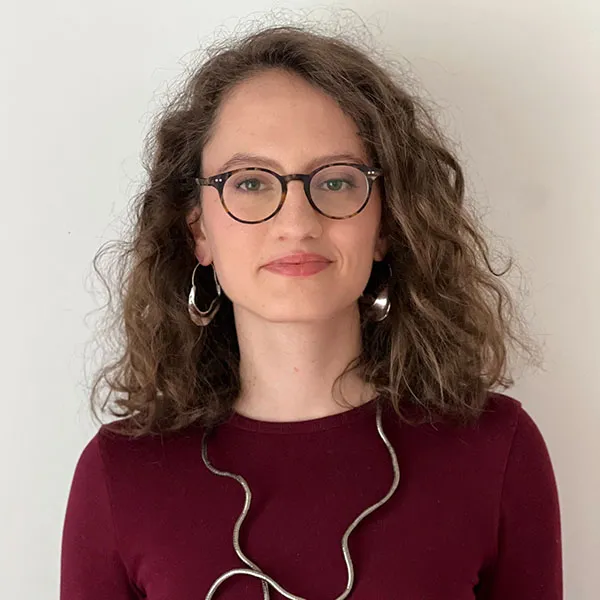
Chiara Picco works in communication and research in the arts. She earned her degree in Museum and Exhibition Communication and Education, and has collaborated with Zètema and the Capitoline Superintendency. Since 2022, she has worked in the Communications Office at ABA Roma, organizing and promoting the institution’s cultural and educational events.
In the EAR project, she designs and implements a dedicated database of doctoral programs in artistic research, mapping national and international higher education offerings.
WP5 Coordinator
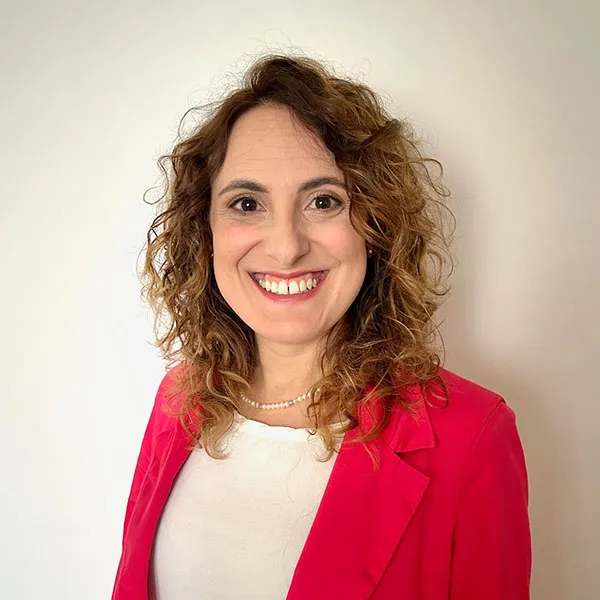
Veronica Cornacchione is a communications professional with over eight years of international experience in strategic roles requiring coordination, stakeholder management, and collaboration with multicultural teams. Specialized in developing and implementing communication strategies, she has led high-impact campaigns, institutional events, and creative partnerships to enhance the visibility and positioning of global organizations.
She has held key communication roles for the WHO’s Health and Migration Programme, the Italian Agency for Development Cooperation (AICS) in Sudan and Ethiopia, and the European Regions Research and Innovation Network (ERRIN) in Brussels. In 2019, she was selected for the United Nations Italian Fellowships Programme, supported by the Italian Government and implemented by UNDESA. She holds degrees in Foreign Languages and International Relations and was recently recognized as a Nova Talent.
End of contract: August the 4th 2025
WP5 Coordinator
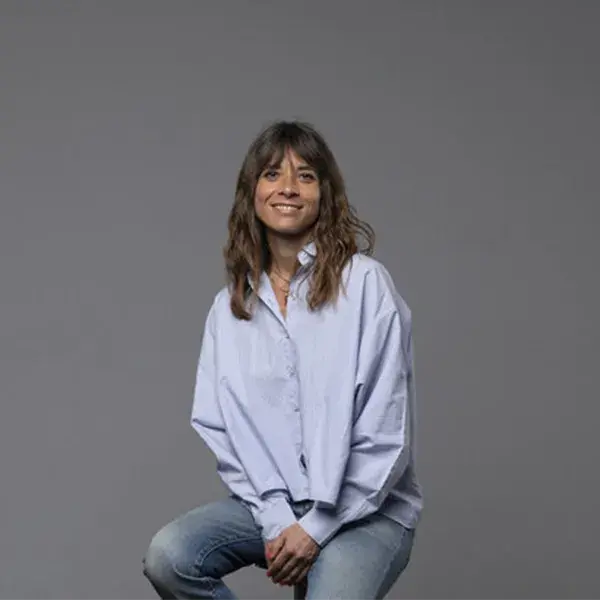
Enrica Murru is a journalist and communication professional with solid experience in managing editorial and digital content. She is currently Coordinator of Work Package 5 “Dissemination, Cultural Mediation and Open Data” within the Enacting Artistic Research (EAR) project at the Fine Arts Academy of Rome. Over the years, she has developed cross-cutting expertise in editorial work, copywriting, content strategy, and partnership management with both institutional and non-institutional stakeholders, collaborating with renowned organizations such as Zètema Progetto Cultura and LazioCrea, publishing houses including Castelvecchi and Coniglio Editore, as well as leading international luxury brands such as Armani, Moncler, Tod’s, and Missoni. She also teaches at IED – Istituto Europeo di Design.
A registered member of the Lazio Order of Journalists, she combines strong writing and research skills with organizational and interpersonal abilities, as well as experience in coordinating multidisciplinary teams, gained over more than fifteen years across publishing, fashion, culture, and digital communication.
Brera Academy (ABABRERA)

The Brera Academy, a public university in the heart of Milan founded in 1776, is a hub for art, cultural heritage, and design. It offers a wide range of knowledge and experiences for those who wish to transform their passion for art into a career. Its educational offering covers fields such as new technologies, scenography, design, fashion, curating exhibitions and events, communication and exhibition setups, as well as the enhancement and restoration of artistic and cultural heritage.
Brera is a benchmark for higher artistic education, also thanks to its strong connection with the city of Milan. It is a brand that attracts students, artists, start-ups, creative enterprises, and institutions at both national and international levels.
Project Contact WP1–WP4
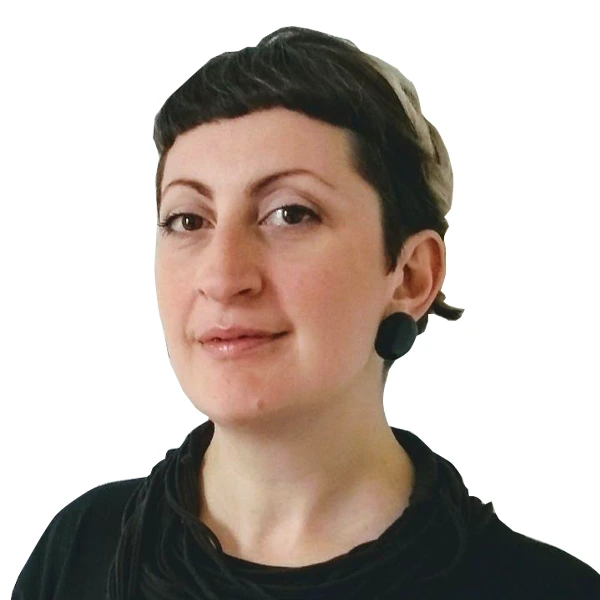
Claudia Maria D’Alonzo is an art historian, curator, and holds a PhD in Audiovisual Studies. She teaches at the NTA School at the Accademia di Belle Arti di Brera and is a member of the doctoral board of the PhD program “Research and Digital Transition in Museum Institutions and Art Galleries” (ABA Brera), as well as of the PhD program “New Media and Critical-Curatorial Practices of Contemporary Creation” (ABA Torino). Since 2023, she has been curator of the contemporary art prize Lydia, promoted by Fondazione Il Lazzaretto in collaboration with PAC Padiglione d’Arte Contemporanea, Milan. Recent curatorial projects include Blue Diamond, a solo show by Rachele Maistrello (Project Room – PAC, Milan, 2023); All of Your Base, a solo show by IOCOSE (Aksioma, Ljubljana, 2022); INBTWN, a digital art program (Centrale Fies, 2020–2022); and When the Towel Drops Vol. 1 by Radha May (Elisa Giardina Papa, Nupur Mathur, Bathsheba Okwenje) at ICA Milano (2019–2020). She has written for Alfabeta2, digimag, doppiozero, Exibart, MCD – Musiques & Cultures Digitales, Castelvecchi, Amsterdam University Press, Mimesis International, and Treccani.
Organizational Coordinator WP1
Curator and researcher, Marialaura Ghidini’s work focuses on the relationship between digital technologies, culture, and society, with particular attention to curatorial practices across online and offline contexts. She earned a practice-based PhD in Curating New Media Art at the University of Sunderland (2015), where she investigated the impact of online curating on cultural production, distribution, and participation. She has curated and developed international exhibition and research projects, including the online platforms or-bits.com (2009–2015) and #exstrange (2017), the publication Silicon Plateau (Bangalore, 2015–present), the archive curating.online (winner of Italian Council 2020), and the symposium Codici Magici (Brescia, 2023). She regularly carries out research, teaching, and public talks within international academic and institutional contexts, including Aalto University, MAP Bengaluru, and Liverpool John Moores University. After working experiences in the UK and India, she currently lives in Italy.
WP2 Contact Person
Art historian, Chiara Nenci teaches Museology and Cultural Heritage at the Brera Academy, where she directs the School of Communication and Enhancement of Artistic Heritage. She collaborates on exhibitions and publications on the nineteenth century, with studies on landscape painting, fine arts exhibitions, and the relationship between literary sources and artistic creation. A scholar of Giuseppe Bossi, she curated Le Memorie di Giuseppe Bossi (Milan, 2003) and Le Ruins di Robert Adam (an unpublished translation by Giuseppe Bossi, Milan, 2025). She coordinates research and heritage enhancement projects focused on the historical collections of Fine Arts Academies and has published on these topics, including Nel segno di Appiani. Nove letture e un progetto d’artista (2021, with R. Ruscio) and Elogio al segno. Luigi Sabatelli (2025, with R. Ruscio and A. Zanella). She has been a member of the doctoral board Tecniche e strumenti per lo studio, la produzione, la conservazione e la valorizzazione dei beni culturali (Brera) since 2024. Within the EAR project, she studies the creative process in nineteenth-century artworks from Brera’s artistic heritage.
WP2 Representative
Rosanna Ruscio is a tenured Art History professor at the Brera Academy. Specialized in 20th-century art, she has worked as an author and consultant for the Dizionario Biografico Treccani and for publishers such as De Agostini and Electa, and has written numerous texts for books and exhibition catalogues. Her publications include Lettere a Wart. Il fondo Arslan: studi e percorsi di uno storico dell’arte (2006); La vocazione artistica nell’epoca dell’Antropocene, in Biennale Art Contemporary (Malta, 2020); Nel segno di Appiani. Nove letture e un progetto d’artista (with C. Nenci, 2021); and Elogio al segno. Luigi Sabatelli (with C. Nenci and A. Zanella, 2025). She recently curated the study day Questione di tecniche: dialoghi aperti tra storia e materiali (Milan, 21-2-25). Since 2024, she has been a member of the doctoral board Tecniche e strumenti per lo studio, la produzione, la conservazione e la valorizzazione dei beni culturali (Brera). Within the EAR project, she focuses on art-historical research on the creative process in 20th-century artworks in Brera’s art heritage.
WP2 Collaborator
Currently enrolled in the five-year Restoration (PFP2) program at the Brera Academy of Fine Arts in Milan, Simona Marzullo has a strong interest in the restoration and conservation of cultural heritage. Her training has enabled her to develop technical skills in assessing the condition of artworks, understanding materials, and applying restoration practices, combining scientific rigor, attention to detail, and sensitivity to conservation issues.

WP2 Collaborator
Alessandra Motta attends the Brera Academy of Fine Arts in Milan in the five-year Restoration program (PFP2), with a focus on painted works on wooden and textile supports, carved wooden artifacts, furnishings and wooden structures, and objects in synthetic materials (processed, assembled and/or painted). She is currently in her thesis year. Her training is grounded in a solid scientific background developed at the Galileo Ferraris Scientific High School in Turin and further strengthened through five years of technical-scientific academic education applied to restoration. She completed an internship in Turin under the supervision of restorer Gherardo Franchino, in collaboration with the Museum of Contemporary Art of Turin, and has taken part in restoration projects in collaboration with the Museo Nazionale Scienza e Tecnologia Leonardo da Vinci in Milan and with various museum institutions, especially in Lombardy. Within the EAR project, she contributes to diagnostic activities applied to artworks owned by the Brera Academy, with particular attention to paintings by Francesco Hayez—central to the institution’s history—and to her thesis research through the study of the work Ritratto del pittore Carlo De Notaris. She carries out infrared reflectography analyses to identify underdrawing and uses additional imaging techniques aimed at material characterization and an in-depth study of conservation conditions.
WP3 Referent
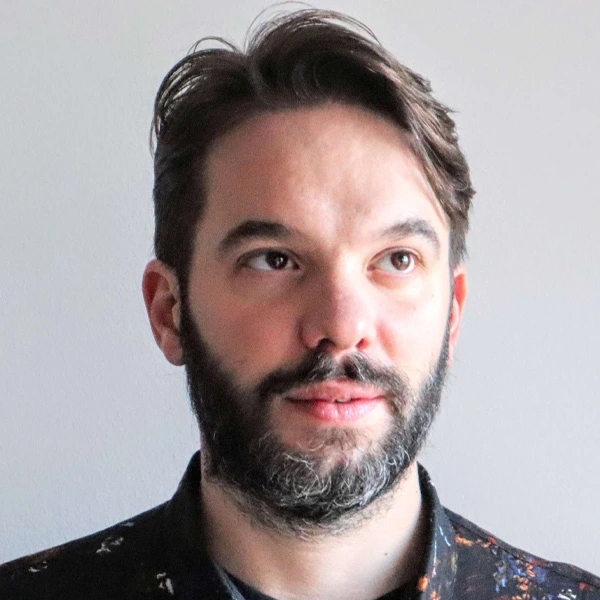
Matteo Cremonesi is an artist and lecturer working in contemporary art and digital cultures, with a particular interest in the aesthetic, social, and political impact of the Internet and new technologies on artistic research and contemporary culture. He is a professor of Interactive Systems and Cybernetics and Information Theory at the Brera Academy of Fine Arts in Milan. He was a member of Link Art Center (2014–2019). He is part of the artist group IOCOSE, with whom he has presented his work in various national and international venues.
WP3 Collaborator
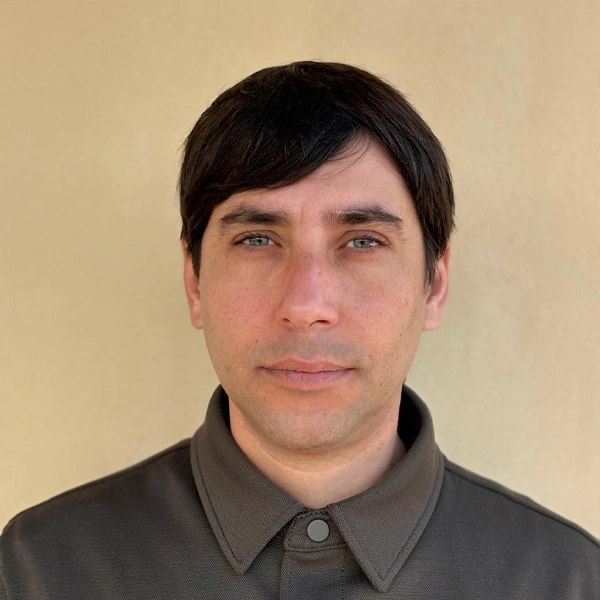
Daniele Murgia is an Interaction Designer and a PhD candidate (All But Dissertation, ABD) at the Faculty of Architecture, Design and Urban Planning of Alghero (UNISS). He has served as an assistant at the Interaction Design Lab of the Laboratorio di Cultura Visiva at SUPSI (University of Applied Sciences and Arts of Southern Switzerland) and has taught creative coding in Genoa at the Accademia Linguistica di Belle Arti. Within the EAR project, he works on the design of the graphical user interface for a Mixed Reality application for the “Kobi” digital platform.
Florence Academy of Fine Arts (ABAFI)

Established in 1784 by the Grand Duke of Tuscany, Pietro Leopoldo, who separated it from the Vasari-founded Accademia delle Arti del Disegno, the Florence Academy of Fine Arts is the oldest public institution in Europe dedicated to artistic study and research. Currently, it is chaired by Giovanni Iovane, art critic and independent curator, and directed by Gaia Bindi, curator and art historian. Approximately 1,800 students are enrolled, coming from all over the world, drawn by a wide range of educational offerings that span from visual arts to applied arts, including museum education and new technologies.
Organized into three departments (Visual Arts; Design and Applied Arts; Communication and Art Education), the Florence Academy of Fine Arts offers first-level academic degree courses (Painting, Sculpture, Decoration, Printmaking, Graphic Design, Set Design, Interior Design, Museum Education, New Art Technologies) and second-level academic degree courses (Painting Methodologies; New Expressive Languages: Decoration, Printmaking, Painting, Sculpture; Illustration; Exhibit Design; Plastic Design for Theatre Set Design; Visual Culture: Art Education, Art Curatorship), as well as professional master’s programs and PhD paths in collaboration with prominent institutions and organizations.
Completing its educational offer is the Scuola Libera del Nudo (Free School of Nude Studies), founded in the 19th century by the Tuscan painter Giovanni Fattori.
Numerous learning opportunities are also organized throughout the year, including workshops, meetings with artists and art professionals, seminars, and exhibition events open to the city.
WP2 Contact Person
PhD Student WP2
Conservatory of Music Santa Cecilia (CONSROMA)
The Conservatory of Music Santa Cecilia adopted its current name in 1923 but traces its origins back to the Congregazione de’ Musici di Roma sotto l’invocazione di S. Cecilia, established in 1595.
The Academic Hall houses an organ of exceptional historical and artistic importance, built in 1894 by the Walker company and expanded in 1966 by the Tamburini company. The library, with over 300,000 items, holds 8 incunabula, 10,000 manuscripts, rare printed editions, and phonographic materials.
The Conservatory is recognized, both nationally and internationally, as one of the most prestigious institutions for the quantity and quality of its educational, musical production, and research activities.
Project Contact
WP2 and WP3 Contact
Carla Conti teaches Choir Conducting and Choral Repertoire at the “Santa Cecilia” Conservatory. She holds a degree in Musicology from the University of Bologna and academic diplomas in Piano, Choral Music and Choir Conducting, and Music Education. She is the Erasmus+ officer and delegate for Artistic Research. In the international projects NEWS in MAP (2019–2022) and RAPPLab (2022–2023) she served, respectively, as Project Manager and Researcher. She conceived the first EU Jean Monnet project within the AFAM sector, EUPROGEMS (2023–2026), and coordinates the second-level Master’s programme AReMus and the specialist biennium FoRaMus. She also conceived and coordinates the international project FARM (2023 and 2024), within the BIP action, in collaboration with the Orpheus Institute in Ghent, as well as the DARE seminars, international meetings on artistic research. She made her debut with the monograph Nobilissime allieve, presented her research at international conferences (Naples, Rome, Helsinki, Bern, Vienna, St Petersburg, Brussels, Berlin, Lisbon), and has published with Italian and international publishers/labels, including LIM, Accademia Nazionale di Santa Cecilia, Symétrie, SEDM, and Giannini Editore. Since 2022, she has been a member of the doctoral boards of Roma Tre University and the “Santa Cecilia” Conservatory.

Expert WP2
Emiliano Manna began his musical training as a pianist (graduating under Maestro Elisabetta Pacelli), and soon expanded his interests to early music (graduating in recorder with Maestro Paolo Capirci), pedagogy (graduating under Maestro Carla Conti), and composition. He has performed as a pianist and flautist in Italy and abroad (Dubai for Expo 2020, Seville, Madrid, Malta, the Imperial Fora in Rome, etc.), and his compositions have also been performed in Germany, the USA, Australia, and other countries. A PhD student focusing on the critical reflection on performance and the creative process, his research explores the repertoire for the “speaking pianist” (an expressive practice in which the pianist is required to recite a text during instrumental performance) and its implications for live performance. Within the EAR project, he investigates the specific features of the creative process involved in composing this repertoire, using his own compositions and works from the second half of the 20th century as primary research material.
Expert WP2
Elisa Pezzuto is a musicologist and singer specializing in voice and music pedagogy. She earned an MA in Musicology at Sapienza University of Rome, a second-level Academic Diploma in Training for Artistic Research in Music, and two first-level Master’s degrees in Artistic Vocology and in Music Theory and Analysis, as well as a second-level Master’s in Artistic Research at the Conservatorio di Santa Cecilia in Rome. She has taught Ethnomusicology in advanced training programs at the University of Bologna, published academic articles on voice and music education, and participated as a speaker at international conferences. In the artistic field, she has released recordings and received national awards. Founder of the Italian group Vocologi Artisti, she combines research with musical practice, focusing on voice and interdisciplinary experimentation. Within the EAR project, she analyses interdisciplinary creative elements related to musical writing.
Expert WP2–WP3
Leonardo Barbierato studied jazz at the conservatories of Alessandria, Piacenza, and Rome, and earned a degree in Biological Sciences (Ecology) at the University of Eastern Piedmont. These studies provided the foundation for his artistic research path, which in 2022 led him to receive a scholarship for the second-level Master’s program AReMus at the Conservatorio di Santa Cecilia in Rome, and in 2023 to be selected for a PhD program at Roma Tre University/Conservatorio di Santa Cecilia. His current research project, Patterns for Transcendence, focuses on the interrelations between improvisation and cultural/environmental ecology, taking shape in site-specific, post-human improvisational performances [in situ], where hybrids of environmental and performative sounds emerge. He has performed at venues and festivals such as Torino Jazz Festival, Roma Europa Festival, European Jazz Expo, Jazz in Sardegna, and Mirabilia Festival. Within the EAR project, he is responsible for creating expositions on Research Catalogue.
Expert WP3
Lorenzo Ballerini is a sound and new media artist, also active in research and teaching. He earned a Diploma in Music and New Technologies at the Conservatory of Florence and a Master’s degree in Artistic Musical Research at the Conservatory of Rome.
His work develops within academia as Professor of Multimedia at the N. Piccinni Conservatory of Bari and as a researcher at the Santa Cecilia Conservatory of Rome, within the R&D team of the EAR project. He has also published scholarly contributions on electroacoustic music, new media, and inclusive music education. As an artist, he combines physical and digital elements, creating transmedia installations and performances that encourage reflection on the social, communal, and political implications of contemporary society. He has taken part in international festivals and projects such as ADE Festival, Berlin Biennale, Bright Festival, Fabbrica Europa, Gaida Festival, ICSC, MA/IN Festival, SMC, and Tempo Reale Festival.
Within the EAR project, he contributes to the development of Kobi, focusing on design, data analysis, and the development of interactive systems to explore new forms of interaction between technology and creativity.
Expert WP3
Alberto Maria Gatti is a composer, computer music designer, and sound designer. His main interest is electroacoustic music, ranging from acousmatic composition to music theatre. Since 2018, he has been exploring the relationship between body and sound, using vibrating transducers to turn objects and bodies into acoustic loudspeakers, alongside an interest in contemporary techniques for sound generation and manipulation.
He has participated in contemporary music festivals and events hosted by institutions such as IRCAM, the Berlin Biennale, Inner Spaces, SMC, Tempo Reale, Museo Pecci, MA/IN Festival, Milano Books, Milano Musica, Fabbrica Europa, the Teatro dell’Opera di Roma, Forum Wallis, and others. He studied electronic music at the Conservatory of Florence and earned the AReMus Master’s degree at the Conservatory of Rome. In 2024, he took part in the IRCAM Artistic Residency Program. He currently works as a freelance composer and teaches at the Scuola di Musica di Fiesole and at the G. Puccini Conservatory in La Spezia.
Within the EAR project, he focuses on perceptually based analysis and description of audio signals.
WP4 Consultant
Maurizio Gabrieli graduated in Composition, Bassoon and Electronic Music at the Conservatorio di Santa Cecilia in Rome, and further trained with Stockhausen, Henze and Sciarrino. Since 1981 he has composed for theatre (Teatro di Roma; Yoshi Oida), dance (Compagnia Nuova Danza; Vera Stasi), television (RAI; Stream), multimedia installations and concerts, with performances in Italy and abroad. He has collaborated with RAI, Stream, Universal Wien and numerous cultural institutions. He has served as a consultant for Ricordi, the Italian Ministry of Cultural Heritage, and the Cantiere d’Arte di Montepulciano. He developed musical software and curated radio broadcasts for RAI Radio3. He has held international seminars in Europe and Asia and has taught in Italian conservatories since 1985. He holds the Chair of Composition at the Conservatorio di Santa Cecilia in Rome, where he founded courses in Applied Music and coordinates the Master’s programme in Music for Video Games. Within the EAR project, he collaborates as an expert in video game music.

WP4 Collaborator
Licia Missori is a pianist, composer, musicologist and producer of music for video games. She performs worldwide, both as a soloist and in collaboration with other musicians. She has toured and worked with several international artists, including Haggard, Belladonna, Spiral69 and Steve Hewitt (drummer of Placebo), and has performed in Italian theatres with Giancarlo Giannini. Alongside an extensive discography, she published the first book in Italy systematically dedicated to game music (Musica per videogiochi, Edizioni Dedalo). She graduated with honours in Music and Performing Arts and earned a Master’s degree in 20th-century Musical Cultures as well as a second Master’s degree in Composition of Music for Video Games. Since 2019 she has worked as a video game music composer, producing for major brands including Google, L’Oréal, Discovery Channel, P&G, Accenture, Lavazza, Mulino Bianco and Chiara Ferragni, among many others. Within the EAR project, she composes and produces the music for the video game Hohenstaufen.
Conservatorio Statale di Musica Alfredo Casella dell’Aquila (CONSAQUILA)

The “Alfredo Casella” Conservatoire of Music is a dynamic center for education, artistic production, and musical research, faithful to its innovative vocation. It promotes the DREAM Ph.D. program and leads or participates in numerous national and international projects (PRIN, PNRR, Erasmus+, collaborating within international networks (AEC, RAMI).
It is the lead institution in international projects such as ItARTS, The New Frontiers of Artistic Musical Research, and MUSAE.
As a partner of EAR, it contributes to the analysis of the creative process, the development of digital platforms, and the mapping of artistic research.
Research at “Casella” focuses on transdisciplinary innovation, the enhancement of heritage, and socio-cultural impact.
Project Lead
WP2 Lead
Daniela Macchione holds a PhD in “History and Analysis of Musical Cultures” (2004) from Sapienza University of Rome. She teaches History and Historiography of Music at the Conservatorio Alfredo Casella, where she also serves as Delegate for Projects and Research and is a member of the D.R.E.A.M. Doctoral Board. Her academic background includes a Piano Diploma, studies in Composition, a second-level Master’s in Neuroaesthetics, and the Italian National Scientific Qualification as Associate Professor.
Her research interests range from instrumental music and 19th-century Italian opera to the creative process (textual criticism), instrumental virtuosity and performativity, and music collecting, with a focus on enhancing Italy’s musical heritage also through advanced technologies and performance practices grounded in the biological bases of aesthetic experience. She is General Editor of the “Works of Gioachino Rossini” series for Bärenreiter Verlag and has curated numerous publications, including critical editions of works by Niccolò Paganini and Sergei Rachmaninoff.
Expert WP2
Silvia Licciardi, PhD in Mathematics and Computer Science, is a researcher at University of Palermo (Department of Engineering), where she develops machine learning and deep learning architectures with applications in the energy sector. She worked for several years at ENEA on topics in pure and applied mathematics applied to problems in biology, classical physics, and quantum physics.
She has authored more than 50 publications in international journals, three monographs, and has participated in numerous international conferences, also as an invited speaker. She has held teaching positions at the University of Palermo and within doctoral programs.
She has obtained several research contracts as an external collaborator with various Italian universities, including her current appointment at Conservatorio Alfredo Casella, applying advanced scientific computing methods to the analysis of musical scores and the study of authorial variants. She is a member of international mathematical associations such as UMI, EWM, and SIMAI. She also holds a degree in flute performance and the ASN as Associate Professor in Numerical Analysis.
Referent WP3
Maria Cristina De Amicis graduated from Conservatorio di Musica Alfredo Casella and progressively moved toward the most advanced trends in contemporary musical language. Thanks to significant experience in music informatics and the use of technology, she founded GRAMMA – Centro di Ricerca e Creazione Musicale, where she carried out artistic and scientific activity from 1989 to 2000.
Her work combines music, technology, and experimentation, including sound design, creative coding, audiovisual installations, generative algorithms, software development, and innovative lutherie. This approach led to innovative results in orchestration and musical conception (Aura, 1994; Codice, 1997; Leben, 2002), as well as in theatre productions. She has taken part in workshops and seminars with leading composers and curated the proceedings of the biennial event La Terra Fertile (1996, 1998, 2000, 2013).
She has written articles and essays on contemporary music and collaborates with private institutions and universities in music research projects, including CRM – Centro Ricerche Musicali and University of L’Aquila. Since 2012 she has been teaching Electronic Music at the Conservatory “A. Casella” in L’Aquila, and since 2022 she has been a member of the Academic Council.
Expert WP3
Massimiliano Cerioni is a composer and sound engineer based in Berlin. As a researcher for the EAR project, he designs algorithms, software prototypes, and dataset-processing pipelines for training large language models and for audio embedding engines. He earned a specialist degree in electronic music at the Conservatory “Alfredo Casella” in L’Aquila, and he also works as a sound artist, teacher, and Max Certified Trainer.
His practice spans music, sound design, creative coding, audiovisual installations, generative algorithms, DSP for musical applications, custom software development, experimental lutherie, and performance. In 2015 he won the 1st Prize at the National Arts Award “Premio Abbado”. His works have been presented at festivals such as CTM, ICMC, Tempo Reale, Artescienza, Kunsttage Basel, and the Psychedelic Film and Music Festival. He collaborates with various artists and is a member of the collectives Radius, Wasch, and Max Berlin Network. He releases music with Elli Records (France).

Expert WP3
Stefano Giacomelli completed a scientific high-school diploma and earned diplomas in Electric Guitar at Saint Louis College of Music, as well as in Electroacoustic Music Composition and in Directing and Sound Technologies at Conservatorio “A. Casella”. He is currently a Ph.D. student in ICT at the DISIM department of University of L’Aquila, where he studies computational applications (Python, MaxMSP, PureData) focused on music information retrieval and auditory scene analysis, using AI (deep learning) models optimised for embedding. He is a graduate student member of IEEE and has participated in conferences (IEEE, AIMI) and published research articles in his fields.
He works as a composer, director, performer, and software developer for acousmatic, intermedial, and live-electronics works, collaborating with various artists. His works have been selected and performed at events and festivals, and he also collaborated with the ElettroAQustica ensemble (ConsAQ) for the production and reinterpretation of Mikrophonie I by Karlheinz Stockhausen. Within the EAR project, he focuses on developing and analysing neural network architectures for multimodal (audio/text) embedding, and on designing automation techniques for extracting acoustic and semantic descriptors from audio and textual sources.
Project Lead WP3–WP4
Alessio Gabriele is a composer, violinist, and computer scientist. His work investigates the relationship between science and music, tradition and experimentation, and music production and performance through electronic technologies. His works range from mixed music to acousmatic pieces, from interactive installations to audiovisual works, and have been presented at international festivals and institutions such as the Accademia Nazionale di Santa Cecilia, NYCEMF, and ArteScienza. He has published articles with MIT Press, CRC Press, ICMC, and other academic venues.
He graduated with honours in Violin and Electronic Music at the “A. Casella” Conservatory in L’Aquila and earned a specialised degree in Computer Science, with research on adaptive intermedial works. Active as a violinist in orchestral ensembles since 1998, he has collaborated since 2008 with the CRM in Rome as a composer and researcher. He has taught at conservatories in Bari, Cuneo, and Salerno, and since 2021 he has been a faculty member in Multimedia at the Conservatory of L’Aquila.
Project Lead WP4
Giovanna Barbati is a viola da gamba player and cellist, with a special focus on Baroque music. She teaches viola da gamba at the “A. Casella” Conservatory in L’Aquila and has long pursued research on historical improvisation practice and pedagogy, with invitations from several European institutions, including the Conservatoire de Paris, MDW Vienna, the Schola Cantorum Basiliensis, and the Mozarteum in Salzburg. She has published articles and prepared editions of previously unpublished Neapolitan manuscripts for cello, and she curated the critical editions of Riccardo Broschi’s Merope and Bernardo Pasquini’s Idalma for the Innsbrucker Festwochen der Alten Musik.
She has served as principal cellist and viola da gamba player in various European Baroque orchestras, including Accademia Montis Regalis. Her recent recordings include the complete cello works of Francesco Supriani, Le virtuose fatiche. Within the EAR project, Giovanna Barbati is the project lead for early music.
Expert WP4
Paolo Valente is an Italian multi-instrumentalist and producer based in Berlin, active in the ambient, electronic, and rock scenes. With roots in electric guitar and choral music, his work explores layered soundscapes built on dynamic contrasts between clean and distorted tones, ethereal moments, and high intensity. He blends voices, acoustic instruments, and electronics, using a wide range of sound effects to create depth and complex textures and to expand the expressive possibilities of live performance.
He earned two specialist degrees in Popular Music and Sound Engineering, with theses on echo (delay) effects and dynamic-range compression. With over 15 years of experience in recording studios and on international stages, he currently tours with several bands and also composes soundtracks and music for advertising.
Within the EAR project, he focuses on identifying and mapping PhD programmes in music and visual arts across European academies, universities, and conservatories.
Istituto Nazionale di Fisica Nucleare (INFN)

The National Institute for Nuclear Physics (INFN) is the national public research body dedicated to the study of the elementary constituents of matter and the fundamental laws of the universe. Its scientific mission is “to promote, coordinate, and conduct scientific research in the fields of nuclear, subnuclear, astroparticle physics, and fundamental interactions, as well as research and technological development relevant to activities in these sectors.”
In Italy, the national research system is composed of public and private entities engaged in scientific and technological research activities. In particular, INFN conducts cutting-edge theoretical and experimental research in the fields of nuclear physics, elementary particles, and astroparticles, in close synergy with major Italian universities and within an international context of intense competition, but above all, of major scientific collaborations.
Università Politecnica delle Marche (UNIVPM)

The Marche Polytechnic University (UNIVPM) is the first technical-scientific university in the Marche region, with its main campus located in Ancona. In the EAR project, the UNIVPM research unit is composed of several research groups from the Department of Construction, Civil Engineering and Architecture (DICEA).
DICEA conducts research in the fields of Civil, Building, and Architectural Engineering, aiming to contribute to the development and dissemination of knowledge useful for improving the safety and resilience of the territory, the productivity and sustainability of the construction sector, and the preservation of cultural heritage. It has been recognized as a Department of Excellence for the periods 2018–2022 and 2023–2027 due to its high scientific productivity and the relevance of its development areas in addressing the most crucial research challenges.
The defined areas are:
1. Heritage Science;
2. Safety of structures, infrastructures, and natural systems;
3. Digital management of construction and the built environment;
4. Climate change and sustainability in construction and transportation.
Project Contact
WP1 & WP5 Contact
WP2 Contact
WP2 Collaborator
Renato Angeloni holds a PhD and specializes in the documentation and representation of Cultural Heritage, with advanced expertise in innovative 3D acquisition and modelling methods such as photogrammetry, laser scanning, and AI-based 3D reconstruction systems. He develops and tests immersive XR applications for the enhancement, protection, and public access of tangible and intangible heritage, working across different scales—from individual objects to architectural and landscape contexts.
His work within national and international research projects, together with his scientific output and ongoing commitment to university teaching, reflects solid experience in defining new models of access, storytelling, and management of Cultural Heritage through digital technologies.
WP3 Contact Person
Alberto Giretti is a Full Professor in the Department of Civil, Building and Architectural Engineering at the Polytechnic University of Marche. He earned a degree in Electronic Engineering in 1990 and a PhD in Artificial Intelligence Systems in 1995 at the same university. His research focuses on advanced building modelling and the application of Artificial Intelligence to the automation of construction processes.
Since 1991, he has held responsibility roles in numerous national and international research projects, including the scientific coordination of European projects within the 5th and 7th Framework Programmes. He has also led technology transfer activities involving public institutions and private companies, and he co-founded the spin-off Nautes. Since 2005, he has been teaching Intelligent Systems for Construction and Facility Management.
WP3 Collaborator
Daniele Pozzi is a sound artist, electronic musician, researcher, and software developer based in Graz (Austria). He studied Electroacoustic Composition (Conservatory of Padua) and Computer Music at the Institute of Electronic Music and Acoustics of the University of the Arts Graz, where he is currently pursuing a PhD. His work focuses on feedback and complex systems, non-standard sound synthesis, emergence, site-specific practice, and algorithmic systems for musical composition and sound art. Alongside his solo work, he collaborates on projects ranging from electroacoustic improvisation (Xyolo Nyote, Strip & Embellish, sun til threads) to sound installations in public space (Klangnetze) and augmented sound walks (Hörselgäng). He has worked on artistic research projects such as Simultaneous Arrivals (Klagenfurt, Austria) and Algorithms that Matter (Graz, Austria). He also works at the Gustav Mahler University of Music (Klagenfurt, Austria) and is Managing Officer of the Research Catalogue platform (Society for Artistic Research). Within the EAR project, he collaborates with the Kobi development team, facilitating the connection with the Research Catalogue database. For ABAROMA, he updates the project page on Research Catalogue and trains teachers, students, and partners in using the platform.
WP4 Lead
Ramona Quattrini, PhD, is Associate Professor of Design (CEAR/10) at the Department of Civil, Building and Architecture Engineering (DICEA) — Univpm, where she also serves as Vice-Director. She is a member of the faculty board of the Doctoral School and co-founder of DISTORI Heritage, an interdisciplinary research group in Digital Cultural Heritage, as well as the Dhekàlos Laboratory, a centre of excellence for the digitisation of cultural heritage. Her research focuses on Digital Cultural Heritage (DCH), in particular on surveying architectural and cultural heritage and on HBIM for intelligent access to knowledge and conservation support. She has developed research on the representation of 3D digital artefacts, deep learning approaches for point-cloud segmentation, web-based and mobile (VR/AR) technologies for cultural heritage storytelling, digital curation and technologies for virtual and digital museums, extended reality, and phygital solutions for narrating tangible and intangible heritage. Within the EAR project, she coordinates the technical and digitisation activities of WP4.

WP4 Collaborator
Tommaso Cherubini is a visual artist whose practice moves across generative artificial intelligence, data processing, immersive environments, and multimedia installations. His artistic research focuses on translating archives and historical databases into layered visual experiences, shaping fluid narratives that question memory, time, and landscape. His aim is to bring to light contemporary challenges and issues through New Media Art, while also revisiting historical archives and databases through Generative AI to give new life to data and images. Across his projects, he views art as a driver of awareness and behavioural change, leveraging the impact of Generative Art to initiate processes of advocacy and to build consciousness around social and environmental themes. He has collaborated with major international museums, including the Museo Egizio in Turin, and with notable music artists such as Lazza. His work has been presented in contexts and venues including Milan Design Week 2025, the Museo di Scienze Naturali di Torino, the Palazzina di Caccia di Stupinigi, Graphic Days 2024 in Turin, and Paratissima. His projects intertwine artistic language and emerging technologies, with particular attention to social and environmental issues.

WP4 Collaborator
Luigi Chierico works within the EAR project on the development of interactive digital models and tools for the enhancement and enjoyment of cultural and architectural heritage. His role includes the design and testing of immersive solutions based on virtual reality (VR), augmented reality (AR), and extended reality (XR), with particular attention to the use of CAVE (immersive environments), serious games, and eye-tracking technologies to analyse user behaviour and engagement. His work also contributes to the development of innovative museum strategies, integrating virtual visit pathways, user-experience evaluation, and technologies for environmental monitoring, in line with the project’s interdisciplinary objectives.
WP4 Collaborator
Fabio Beltotto is a cultural manager and creative director. He has built solid experience in designing and leading initiatives that connect art, culture, and innovation, with the aim of making cultural heritage more accessible and participatory. He has collaborated with international organisations in cultural cooperation programmes in Africa, South America, and the Middle East, developing capacity-building projects, local development initiatives, and projects focused on the enhancement of local identities. Throughout his career, he has contributed to projects applying innovative technologies to art and cultural heritage, expanding approaches to conservation and public engagement. Through exhibitions and audiovisual productions, he promotes culture as a tool for connection, dialogue, and social transformation, highlighting its strategic role in processes of growth and innovation. Within the EAR project, he contributed to the implementation of the PhD Hub platform by collecting, analysing, and systematising advanced training pathways offered by universities and higher-education institutions at national and international level. Beltotto collaborated on the project (WP4) until November 2025.
WP4 Collaborator