The first-level course in Photography and Video was established in 2016 to meet the demands of a number of students interested in specialising in photographic and audiovisual language. Students enrolled in the course are guided over the three-year period in a well-structured and coherent training programme that addresses the issues of constructing photographic and video images from both a technical and a methodological point of view, in the belief that every artistic language is the expression of a conscious thought capable of adapting technique to their expressive needs. The study plan is structured around theoretical courses, laboratories and workshops, and students have access to professional and semi-professional equipment for photography and video shooting, multimedia classrooms on PC and Mac platforms, a digital printing laboratory, an analogue printing laboratory and an editing laboratory. The working environment is focused on respecting the needs and inclinations of each individual student, in the belief that the primary objective of teaching is to ensure that everyone has the opportunity to develop their talent. Whether you are interested in acquiring specific professional skills or are more drawn to new forms of artistic expression, the three-year Photography and Video course allows you to develop techniques and working methods in depth and develop a critical eye and an awareness of how to make a difference in the job market.
Photography and Video
Find out more about the course and become part of ABARoma
Course overview
Department: Design and Applied Arts
School: Cinema, Photography, Audiovisual Arts
Duration: 3 years
Total credits: 180
I progetti dei nostri studenti
Course coordinator
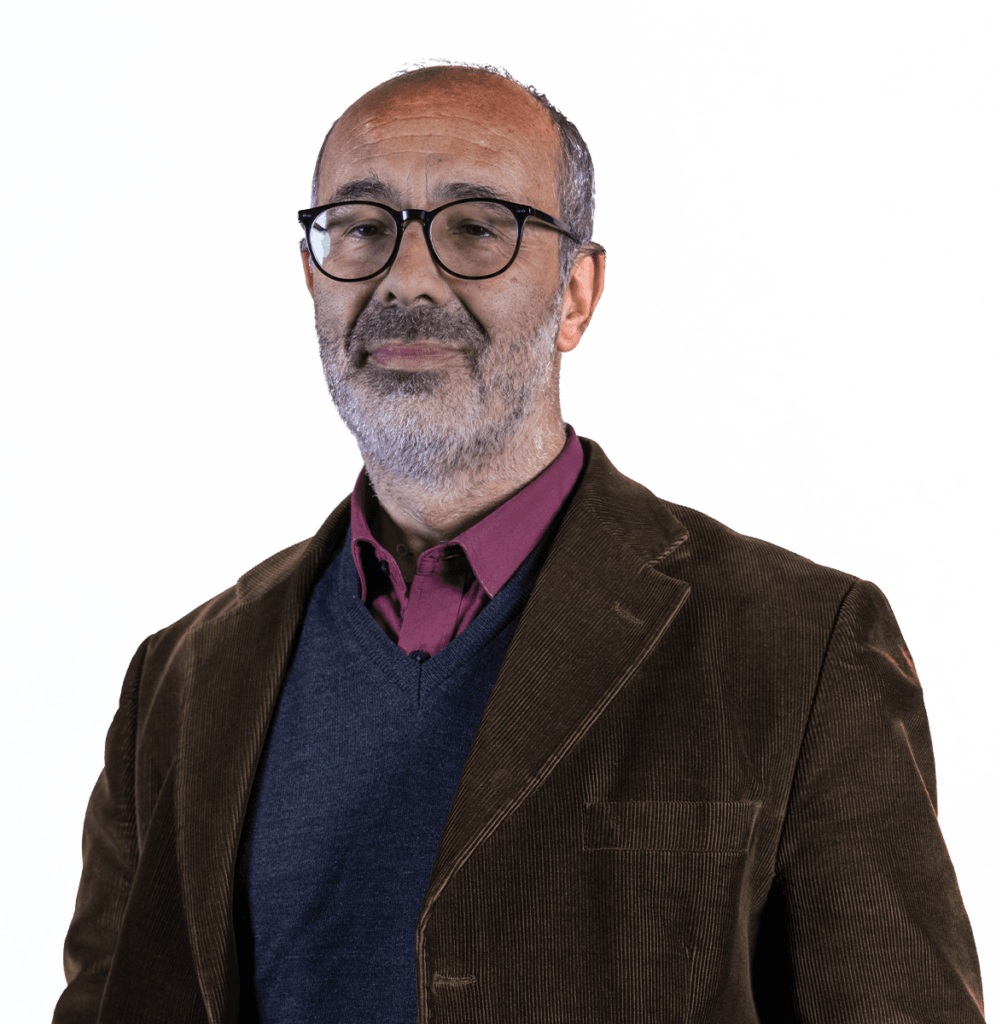
Prof. Bruno Di Marino
Bruno Di Marino is a scholar of the moving image, specialising in audio-visual experimentation, new media and the relationship between cinema and other artistic fields (visual arts, design, architecture, photography, music). In 1993, he founded the audiovisual archive of the Museum Laboratory of Contemporary Art at La Sapienza University in Rome, where he served as director until 2001. Since 1990, he has been conducting courses, workshops, and lectures at a number of universities and fine arts academies in Italy and abroad.
Learning Objectives
The course of study for the first-level academic diploma of the School of Cinema, Photography, and Audiovisual Arts – Photography and Video programme – aims to create a highly professional course of study, backed by adequate theoretical and technical training for the expressive use of photography and video. The now complete digital conversion of photography and video has meant that the many technical aspects of these two fields have been merged into a single learning system that provides an integrated course of study. The course offers a specific approach to the different forms of communication, including through the study of historical and critical subjects. Therefore, technical and laboratory subjects are complemented by theoretical teaching that enables students to understand the multiple interactions resulting from the complexity of communication systems. Through practice and the study of methodologies, comparison between media and historical-artistic reflections, the aim is to develop the student’s professional identity in order to enable them to interact with photographic and video production systems both in the new media and art markets. The study plan is structured around compulsory courses and other supplementary training activities chosen by the student to develop certain areas in more depth and to define the training programme in a more individual way. At the end of the diploma course, students will have acquired: – in-depth technical/operational training and their own design methodology; – awareness in the use of audiovisual languages; – adequate knowledge of critical tools; – skills and tools suitable for the expressive management of complex projects in the field of visual communication; – effective knowledge of at least one European Community language, in addition to their mother tongue. Credits are acquired through lectures, practical workshop exercises, individual study and self-learning, projects and theses. The student’s preparation is assessed through ongoing tests and assessments at the end of each course, as well as individual interviews (exams) during the exam sessions. During the three years, students are expected to participate in workshops and training and orientation internships in a purely workshop environment, which will be useful for their entry into the world of work. Graduates of the course are able to continue their studies with a second-level specialised diploma (two-year course), a first-level master’s degree or decide to enter the job market.
Career prospects
The objective is to train professionals who possess skills that can be applied in various areas of the professional landscape and in the contemporary art system, by means of their knowledge of new technologies and their application in the creation of audiovisual and multimedia works. With the skills acquired during their studies, graduates will be able to pursue professional careers both as freelancers and in public institutions and private companies, such as: – professional photographer, photo editor – video operator, video maker, video designer, video editor, video compositor – digital artist – 3D modeller and animator. To facilitate contact and familiarity with the job market, the Academy will organise, in agreement with public and private bodies, the most appropriate work placements and apprenticeships to help students achieve specific professional qualifications.
Entry requirements
To be admitted to the first level course in Photography and Video, applicants must hold a secondary school diploma or other qualification obtained abroad and recognised as equivalent by the Academy in accordance with international agreements. Candidates will be selected through the evaluation of documentation and an interview. Candidates are required to submit: – their educational curriculum vitae (studiorum type), including any professional experience deemed useful for the overall assessment of this diploma course – paper and digital documentation relating to previous photographic and audiovisual work – a motivational letter (personal statement). During the interview, a committee will assess the candidate’s skills and motivation and verify their level of basic computer skills.
Type of final assessment
The final assessment for obtaining the first-level Academic Diploma consists of the design and implementation of a photographic and multimedia project accompanied by a related theoretical thesis that defines and explores its historical and linguistic implications.
SCOPRI IL PIANO DEGLI STUDI
School of Cinema, Photography, and Audiovisual Arts
First-level academic diploma course in Photography and Video - DAPL11
FIRST YEAR
| Codice | Obbligatorie | a scelta | Insegnamento | CFA | Tipologia | Ore | Tot. CFA |
|---|---|---|---|---|---|---|---|
| ATTIVITÀ FORMATIVE DI BASE | 62 | ||||||
| ABPC65 | x | Teoria e metodo dei mass media | 6 | T | 45 | ||
| ABST47 | x | Storia dell’arte contemporanea | 6 | T | 45 | ||
| ATTIVITÀ FORMATIVE CARATTERIZZANTI | |||||||
| ABPC66 | una a scelta | Storia della fotografia | 6 | T | 45 | ||
| ABPC66 | Storia del cinema e del video | 6 | T | 45 | |||
| ABPR31 | x | Fotografia 1 (Teoria e tecnica fotografica di base) | 8 | TP | 100 | ||
| ABPR31 | x | Fotografia digitale 1 (Street photography) | 6 | TP | 75 | ||
| ABTEC38 | x | Elaborazione digitale dell’immagine | 6 | TP | 75 | ||
| ABTEC40 | x | Linguaggi multimediali | 8 | TP | 100 | ||
| ABTEC43 | x | Digital video | 8 | TP | 100 | ||
| ATTIVITÀ FORMATIVE ULTERIORI | |||||||
| x | Workshop di Fotografia | 4 | 100 | ||||
| ABLIN71 | x | Inglese | 4 | T | 30 | ||
SECOND YEAR
| Codice | Obbligatorie | a scelta | Insegnamento | CFA | Tipologia | Ore | Tot. CFA |
|---|---|---|---|---|---|---|---|
| ATTIVITÀ FORMATIVE DI BASE | 60 | ||||||
| ABPC67 | una a scelta | Scrittura creativa | 6 | TP | 75 | ||
| ABTEC37 | Metodologia progettuale della comunicazione visiva | 6 | TP | 75 | |||
| ABPC65 | x | Teoria e analisi del cinema e dell’audiovisivo | 6 | T | 45 | ||
| ABST46 | x | Estetica | 6 | T | 45 | ||
| ATTIVITÀ FORMATIVE CARATTERIZZANTI | |||||||
| ABPR31 | x | Fotografia 2 (Linguaggi fotografici contemporanei) | 6 | TP | 75 | ||
| ABPR31 | x | Fotografia digitale 2 (Tecniche fotografiche avanzate, still-life, beauty e moda) | 6 | TP | 75 | ||
| ABPR31 | x | Direzione della fotografia | 6 | TP | 75 | ||
| ABTEC43 | x | Video editing 1 | 8 | TP | 100 | ||
| ABTEC44 | x | Audio e mixaggio | 6 | TP | 75 | ||
| ATTIVITÀ FORMATIVE ULTERIORI | |||||||
| x | Workshop di Video | 4 | L | 100 | |||
| DISCIPLINE A SCELTA DELLO STUDENTE | |||||||
| x | A scelta | 6 | |||||
THIRD YEAR
| Codice | Obbligatorie | a scelta | Insegnamento | CFA | Tipologia | Ore | Tot. CFA |
|---|---|---|---|---|---|---|---|
| ATTIVITÀ FORMATIVE DI BASE | 42 | ||||||
| ABST51 | Fenomenologia delle arti contemporanee | 6 | T | 45 | |||
| ATTIVITÀ FORMATIVE CARATTERIZZANTI | |||||||
| ABPC66 | una a scelta | Storia e teoria dei nuovi media | 6 | T | 45 | ||
| ABST45 | Teorie del mercato multimediale dell’arte | 6 | T | 45 | |||
| ABPR31 | una a scelta | Fotografia per i beni culturali | 6 | TP | 75 | ||
| ABTEC38 | Drammaturgia multimediale | 6 | TP | 75 | |||
| ABTEC43 | Elementi di produzione video | 6 | TP | 75 | |||
| ABPR36 | una a scelta | Installazioni multimediali | 6 | TP | 75 | ||
| ABTEC38 | Tecniche di animazione digitale | 6 | TP | 75 | |||
| ABPR31 | x | Fotografia digitale 3 (Autorialità nella fotografia contemporanea) | 6 | TP | 75 | ||
| ABPR31 | x | Documentazione fotografica (Fotografia etica) | 6 | TP | 75 | ||
| ABTEC43 | x | Video editing 2 | 6 | TP | 75 | ||
| Codice | Obbligatorie | a scelta | Insegnamento | CFA | Tipologia | Ore | Tot. CFA |
|---|---|---|---|---|---|---|---|
| DISCIPLINE A SCELTA DELLO STUDENTE | 16 | ||||||
| x | A scelta | 6 | |||||
| ESAME DI DIPLOMA | |||||||
| x | Tesi | 10 | |||||
Contact us
Are you interested in the Photography and Video course but need more information?
Please use the form to contact us, and we will be happy to answer your questions.