Sara
Santarelli
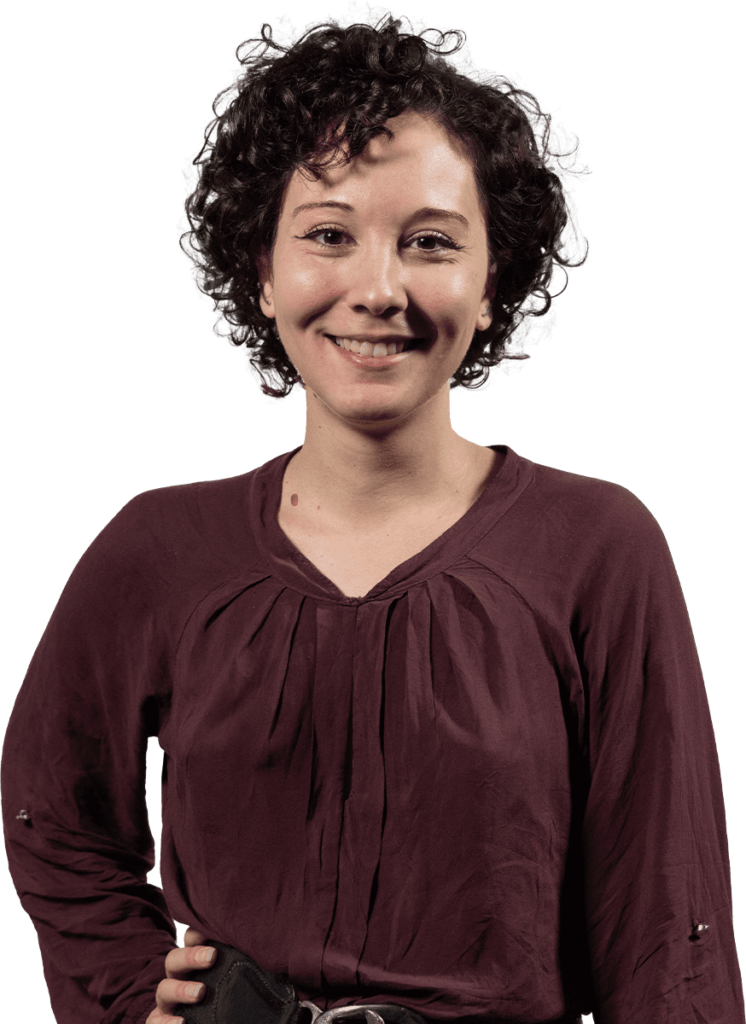
SARA SANTARELLI is a lecturer in Multimedia Techniques for Decoration.
Main exhibitions, publications and collaborations:
2022
– ‘Donna, Vita, Libertà’ (‘Woman, Life, Freedom’) Chi L’ha visto? RAI 3. Iran Special. My appeal for the young people protesting in Iran following the death of Mahsa Amini.
– ‘Second Life: tutto torna’ (‘Second Life: It All Comes Back Around’), curated by Marco Meneguzzo and Sergio Risaliti. Travelling exhibition: Foyer of the Teatro del Maggio Fiorentino, Officina Giovani Prato, Pistoia Town Hall, Fortezza da Basso Florence, Maire Tecnimont Evolve Foundation – Torri Garibaldi Milan.
– Featured in the photo credits of the catalogue ‘Terra Sacra. L’arte necessaria” (Sacred Land: Necessary Art), edited by Flavio Arensi, SKIRA Editore, Mole Vanvitelliana, Ancona.
2020
– ‘#DomaniInArte’ Library/video room, GAM – Galleria d’Arte Moderna, Rome.
2019
– SOLO EXHIBITION ‘RIZOMA-Atelier #2’ MACRO – Museum of Contemporary Art, Rome. Self-Portrait – Talk with Giovanni Muciaccia, Giovanni Albanese and G. E. L. Nidiaci. (‘Rizoma, Sara Santarelli’s latest project’ INSIDEART article, 29/11/19)
– ‘World Ready-Made Day’ curated by Pablo Echaurren. Salone dei Forum, MACRO – Museum of Contemporary Art, Rome. Report by Bruno Luverà ‘L’artista clandestino’ (The Clandestine Artist) on TV7 – RAI 1.
– ‘Arte/Scienza di Pace. Un segno d’Artista” MUDITAC – Museo Didattico Territoriale Arte Contemporanea, ‘Ettore Majorana’ Secondary School, Rome.
– ‘Now and Forward: Emerging Artists in Rome’ curated by Tiziana Musi and Shara Wasserman, ‘Young Artists Active on the Roman Art Scene Today’, Gallery of Art, Temple University Rome Campus.
2018
– Collaboration on the solo exhibition by Giovanni Albanese, Fondazione Volume!, Rome. Organisational and photographic coordination for the book ‘L’Armata dei senzatetto’ by Ascanio Celestini and Giovanni Albanese, CONTRASTO Editore.
– Collaborated on the creation of the work ‘L’albero della cuccagna’ by G. Albanese, curated by Achille Bonito Oliva, catalogue SKIRA Editore. Scuderie Aldobrandini, Frascati.
2017
– ‘I think art is…’ interviewed in Lara Nicoli’s video documentary. Published by RAI MACRO – Museo d’Arte Contemporanea, Rome; Palazzo Collicola Arti Visive, Spoleto. – ‘Save a Work of Art’ auction, Fondazione Città Italia. Baths of Diocletian, Rome. 2016
– Collaboration with Fondazione Volume! for the solo exhibitions of Walid Raad and Felix Schramm
Programme
Decoration plays a central role in all multimedia languages. Take, for example, the recent documentary on David Lynch, in which the artist explains how his cinema is a direct expression of his artistic work. The course encourages students to reflect on how art is a form of active thinking and a key to understanding contemporary cultural dynamics, and its aim is to analyse a wide range of techniques used in art practice, with the goal of developing students’ creativity in a kaleidoscopic manner, leading to new imaginative scenarios. We will examine the work of artists such as the Australian scientist Margaret Wertheim, who, through her project exploring the interplay between art, science and audiovisual media, demonstrates in her books, documentaries and crochet pieces that imagination and creativity are as important as scientific knowledge. Many new technologies are now being used in art. Neri Oxman, whose projects combine design with biology, computer science and materials engineering, demonstrates that we can move away from the era of machines and pollution towards an era of symbiosis between our bodies, the microorganisms that inhabit them, our products and our buildings. An era of ‘material ecology’. Anicka Yi is also a champion of contemporary experimental art; indeed, she works with microorganisms and odours. We will also explore the work of artists who, over the course of their lives, have engaged with cinema, drawing and the creation of material works, such as Federico Fellini, Julian Schnabel and Tim Burton. By experimenting with the techniques that best suit their creative vocation and engaging in dialogue with the lecturer, students are required to create one or more works of art, explaining the choices they have made and describing their creative journey.
Recommended reading
– Maria Lai ‘Sguardo, opera, pensiero. L’arte visiva strumento di pensiero’, Ed. Arte Duchamp, 2004.
– Oxman, Antonelli, ‘Neri Oxman Material Ecology. Catalogue’ MoMA, 2020.
– Anna Paparatti ‘ARTE-VITA a Roma negli anni ’60 e ’70. La pitturessa’ De Luca Editori d’Arte, 2015.