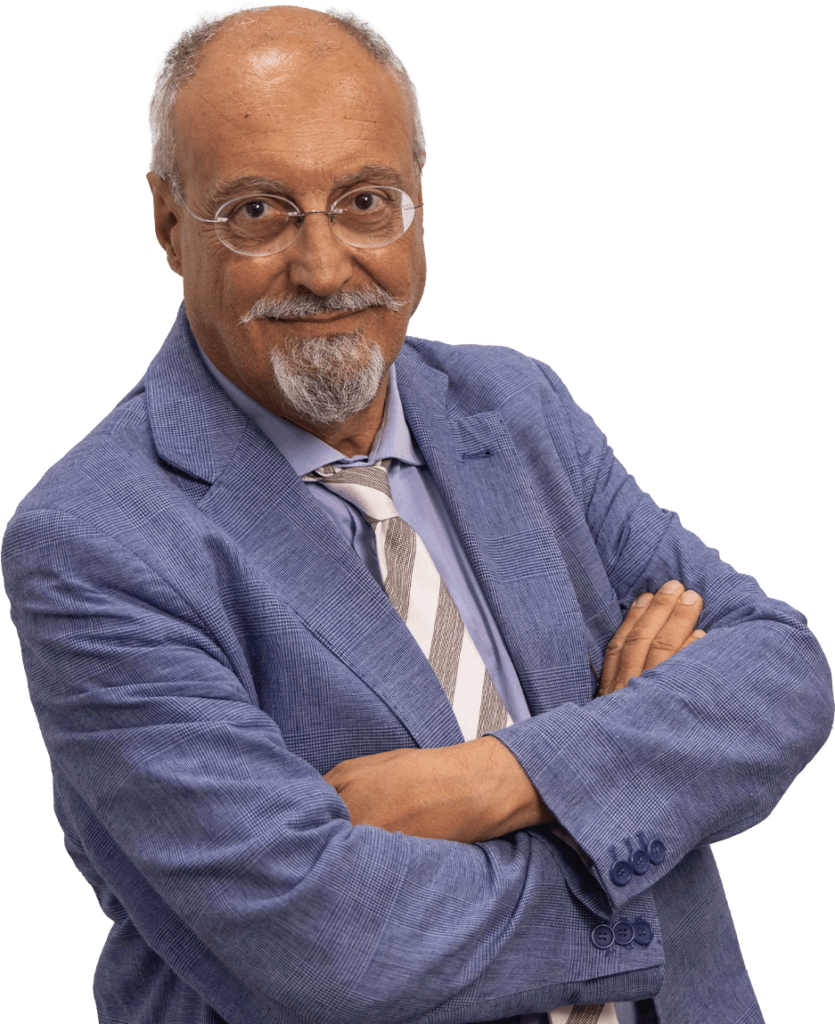
Dario
Evola
Dario Evola (Palermo, 6 January 1958)
Essayist, Professor of Aesthetics (ABST46) at the Academy of Fine Arts in Rome.
Classical secondary school leaving certificate, Liceo G. Garibaldi, Palermo.
DAMS degree, University of Bologna, 110 cum laude, Supervisor Prof. Fabrizio Cruciani, 1981. Dissertation: Il teatro di poesia in Inghilterra negli anni Trenta (‘Poetry Theatre in England in the 1930s’).
Research Doctorate in Performing Arts, 1st cycle, 1986. Thesis: L’utopia propositiva di Vito Pandolfi. Teatro, cinema, televisione in Italia dagli Anni Trenta agli anni Cinquanta. Published by Bulzoni, Rome 1992.
National Scientific Qualification, sector M.Fil. 04, Level II, Aesthetics and Philosophy of Language, 2018.
Member of the Board of Lecturers for the 39th doctoral programme: Cultures, Practices and Technologies of Cinema, Media, Music and Dance.
Former member of the ABAROMA Academic Board.
Former member of the Scientific Committee of the Museum Laboratory of Contemporary Art at La Sapienza University.
He has taught History of Contemporary Art at the Faculty of Communication Sciences, La Sapienza University.
Former coordinator of the ABAROMA School for the Communication and Promotion of Contemporary Artistic Heritage.
He has collaborated on RAI’s cultural programmes. He has also contributed to the cultural pages of newspapers and periodicals. He has been highly active in the fields of theatre, cinema, live arts and media, focusing on the relationships between artistic languages and electronic and digital technologies. He is the author of numerous scientific and popular publications on these topics. He has taught at the Academies of Fine Arts in Viterbo, Macerata, Florence and Rome.
In the field of advanced arts education, he participates in European projects, collaborating with the Academies and Universities of Budapest, Dresden, Riga, Amsterdam, Wrocław and Barcelona.
To find out more about Dario Evola, please see the PDF:
Aesthetics (ABST46) 2025–2026 Academic Year
Teams codes:
Three-year course:
vrc2xvm
Two-year course:
8mwjwrb
The course is delivered over one year and divided into two semesters: one for the THREE-YEAR COURSE and one for the TWO-YEAR COURSE. Attendance is compulsory in order to take the exam. It is advisable to agree with the lecturer on a written paper to be submitted, complete with notes and a bibliography, at least one week before the exam session. Knowledge of English and an appropriate level of preparation for higher education are required. During the course, assessments will be carried out to determine students’ eligibility to sit the exam. Students are encouraged to contact the lecturer to arrange meetings.
Office hours:
Wednesday 9:30 am – 12:30 pm
The supplementary course in Aesthetics is open to students from all Schools. The objective of the course is to identify and analyse epistemological questions relating to the expressiveness, creativity and intentionality of the work of art. For the first three years of the programme, the course includes an initial preparatory section that addresses the core topics of the discipline through a historical overview, covering the fundamental themes of the history of Western thought and analysing the central concepts of the discipline: from etymology to the terms Aesthetics, Art, Poetics, Form, Beauty, Imitation and Aesthetic Experience. The second part of the course, covering the two-year period, focuses on selected 20th-century phenomena, starting with the historical avant-garde, in order to conduct an analytical comparison across different artistic languages. For the purposes of the exam, students agree with the lecturer on one or more texts from the recommended reading list, in relation to the artistic research project that the student presents to the lecturer during the year. An initial introductory section is followed by an in-depth study tailored to the specific courses, specialisations, schools, and three-year or two-year programmes. To sit the exam, it is essential to engage with the lecturer during the in-person interviews held during office hours. Participation in the initiatives indicated by the lecturer during the year is considered an integral part of the course, including for the purposes of the possible award of CFA credits.
Compulsory text:
Evola, D. La funzione moderna dell’arte. Estetica delle arti visive. Mimesis, Milan 2018.
Recommended optional readings:
D. Formaggio L’arte, come idea e come esperienza. Morcelliana, Brescia 2018.
Desideri, F., Cantelli, C. Storia dell’estetica occidentale da Omero alle neuroscienze. Carocci, Rome 2020.
Savettieri, C. Dal Neoclassicismo al Romanticismo. Fonti per la storia dell’arte. Carocci, Rome 2022.
Tatarkiewicz, W., Storia di sei idee. Aesthetica, Palermo, 1993.
Di Giacomo, G., Arte e modernità: una guida filosofica. Mimesis, Milan 2016.
Di Giacomo, G. Fuori dagli schemi: estetica e arti figurative dal novecento a oggi. Laterza, Rome 2015
Vernant, J.P. L’immagine e il suo doppio dall’era dell’idolo all’alba dell’arte. Mimesis, Milan, 2010.
Russo, L., (ed.) Estetica della scultura. Aesthetica, Palermo 2003.
Falcinelli, R. (ed.) Filosofia del graphic design. Einaudi, Turin 2022.
Vercellone, F., Bertinetto, A., Garelli, G., Lineamenti di storia dell’estetica. Il Mulino, Bologna, 2008.
D’Angelo, P. Estetica, Laterza, Rome, 2011.
Diodato, R., Somaini, A. (eds.) Estetica dei media e della comunicazione. Il Mulino, Bologna, 2011.
Cruciani, F. Lo spazio del teatro. Laterza, Bari, 1992.
Recommended reading:
Evola, D. La funzione moderna dell’arte. Estetica delle arti visive. Mimesis, Milan 2018.
Vercellone, Bertinetto, Garelli, Lineamenti di storia dell’estetica. Il Mulino, Bologna, 2008.
Bordini, S. L’Ottocento. Fonti per la storia dell’arte 1815–1880. Carocci, Rome 2013.
Desideri, F., Cantelli, C. Storia dell’estetica occidentale da Omero alle neuroscienze. Carocci, Rome 2020.
Benjamin, W. L’opera d’arte nell’epoca della sua riproducibilità tecnica, Einaudi, Turin 2000.
Michaud, Y. L’arte allo stato gassoso. Mimesis, Milan 2019.
Panza, P. L’opera d’arte nell’epoca della sua riproducibilità finanziaria. Guerini, Milan 2015.
Panza, P. Arte come comunicazione. Estetica e storia della letteratura artistica. Estetica e storia della letteratura artistica. Guerini. Molano 2022.