Francesca
Longo
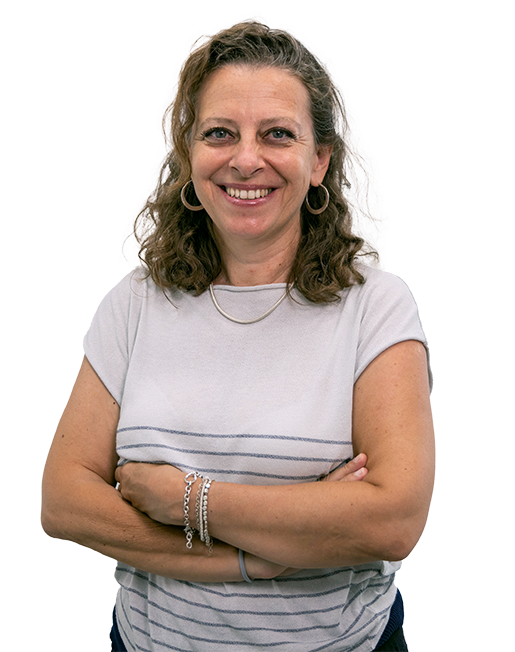
Francesca Longo lives in Rome. She studied at the Academy of Fine Arts in Rome and holds a Master’s degree in Cultural Heritage Management. She has extensive and varied experience in the field of cultural and environmental heritage, which she has been working on since 1998 through studies, research and management and enhancement projects in both the public and private sectors. She lectured at the postgraduate schools in Historical and Artistic Heritage at the University of Tuscia from 2001 to 2008 and at the University of Macerata from 2008 to 2018. She is on the list of experts of the FSP (Fondazione Scuola del Patrimonio) of the Ministry of Culture and is a member of ICOM (International Council of Museums). Between 2001 and 2005, she collaborated with various associations, including AEC (Associazione per l’Economia della Cultura), ECCOM (European Centre for Cultural Organisation and Management), the Luigi Sturzo Institute, Federculture, Sudgest and IZI. From 2008 to 2016, she worked as a Project Manager for private companies, including Culture soc.coop, and in public administration: City of Rome – Department of Economic and Development Policies (2003–04), Mayor’s Office (2006–08), Department of Culture and Tourism (2014–16), and Lazio Region – Office of the President (2005–06). Since 2017, she has been the director of the independent project space Chiaroscuro Arte Contemporanea.
To find out more about Francesca Longo, please see the PDF:
The course aims to provide an understanding of cultural heritage from a historical, institutional, legislative and practical perspective. The first part of the course focuses on the history of the protection and promotion of cultural heritage, from the period before Italian unification to the present day. The second part of the course focuses on providing knowledge of the institutions involved in the protection, conservation, management and promotion of cultural heritage: UNESCO, the European Union, the Italian Ministry of Culture, regional and local authorities, the private sector and non-profit organisations. The third part of the course provides an introduction to the Code of Cultural and Landscape Heritage, the tools used for the conservation, cataloguing and handling of works of art, and the relevant professional figures involved.
The teaching and study materials will consist of textbooks, lecture notes, slides and documentary videos.
Reading list
- B. Mirri, Per una storia della tutela del patrimonio culturale, 2014, Ed. Sette città
- F. Longo, Beni culturali e ambientali. Orientarsi tra istituzioni, risorse, potenzialità, Palombi, 2021
- B. Mirri, Codice dei beni culturali e del paesaggio, Fifth edition, 2017, Sette città Publishers
The exam is oral.
This course aims to explore the world of cultural heritage in its broadest sense, examining the different types of heritage in relation to their historical and social context. Through the analysis of a number of case studies, the course will explore the local area, its history and the memory of its sites, and will identify the various possibilities for enhancing the heritage asset. The programme is divided into two parts: the first is theoretical, focusing on the management and enhancement of selected cultural and environmental heritage sites, while the second takes the form of a workshop, involving the implementation of a real enhancement project.
Part One – Cultural Heritage in History and Memory
Intangible heritage (traditions, festivals and rituals, music), artists’ studios and residences (e.g., Studio Trombadori), industrial archaeology (disused buildings, transport, bridges and infrastructure, industrial design and products), marine and underwater heritage (aquariums, naval, military and migration museums), historic parks and villas (gardens, urban allotments, agriculture), prehistoric sites (caves, prehistoric museums, caving, geology), and audiovisual heritage (film libraries, radio and audiovisual archives).
Part Two – Workshop/Artist’s Memoirs Project
Students will be involved in the development of a real enhancement project, from the design process to its actual implementation. A collaboration between the School of Communication and Promotion of Contemporary Artistic Heritage (Cultural and Environmental Heritage course) and the School of Cinema, Photography, and Audiovisual Arts (Photography and Video course). The objective is to make the stories of artists and the places where they lived and worked known to a wider audience. For example, artists’ studios that still exist, presented through their contents and the unique setting in which they were located and remain to this day.
The educational and study materials will consist of texts, documents, slides and documentary videos.
Bibliography
- Dal Pozzolo, L. Il patrimonio culturale tra memoria, lockdown e futuro – Editrice Bibliografica, 2021
- Volpe, G. Un patrimonio italiano. Beni culturali, paesaggio e cittadini – Utet 2016
- Loffredo, A. Noi del rione sanità (We of the Sanità district), Mondadori, 2013
- Amari, M. Elementi di progettazione culturale. Methodology and Tools for Upholding Cultural Rights. Franco Angeli, 2017
The examination takes the form of a theoretical-practical assessment.
The aim of the course is to introduce and examine the concept of cultural heritage in relation to a number of current issues: cultural events, cultural heritage in armed conflicts, and the phenomenon of cancel culture. The aim is to explore the world of cultural heritage and cultural activities in all its complexity and in relation to their historical and social context. Through the analysis of a number of case studies, the course will explore the local area, its history and its memory, and will identify the various possibilities for enhancing the heritage asset by drawing up a project based on, and seeking out, public funding opportunities. The programme is divided into two parts: the first is theoretical, focusing on the management and enhancement of selected cultural and environmental heritage sites, and the second is workshop-based, involving the development of a real enhancement project.
Part One – Cultural Heritage and Today’s Society: Cultural events: celebrations, festivals, concerts, exhibitions. (Estate Romana, May Day Concert, Venice Biennale); Cultural heritage and armed conflicts of the past and present, from the Great War to the conflict in Ukraine; the phenomenon of cancel culture in the arts – reflections and social issues. Europe’s role in cultural cohesion (programmes and funding, Creative Europe, awards, Cities of Culture, etc.)
Part Two – Planning an event (exhibition, concert, performance, etc.) from the initial concept to identifying the means of implementation (researching public funding opportunities, e.g., the Estate Romana call for proposals, cost estimates, communications plan, timetable, etc.)
The teaching and study materials will consist of textbooks, handouts, slides and documentary videos.
Reading list
- Montanari, T. Se amore guarda. Un’educazione sentimentale al patrimonio culturale, Einaudi, 2023
- Fava, F. Estate romana. Tempi e pratiche della città effimera, Quodlibet, 2017
- Baratta, P. Il giardino e l’arsenale. Una storia della Biennale – Marsilio, 2021
- Arte liberata: Capolavori salvati dalla guerra. 1937/1947 (Liberated Art: Masterpieces Saved from War. 1937/1947) 1937/1947 Exhibition catalogue, Scuderie del Quirinale 2021–2022 L. Gallo, R. Morselli, Electa, 2023
- Convention for the Protection of Cultural Property in the Event of Armed Conflict (The Hague, 1954)
- Maifreda, G., Immagini contese. Storia politica delle figure dal Rinascimento alla cancel culture, Feltrinelli, Milan 2022.
- Parola, L., Giù i monumenti, Einaudi, Turin, 2022.
- Amari, M. Elementi di progettazione culturale. Metodologia e strumenti per il rispetto dei diritti culturali (Elements of Cultural Planning. Methodology and Tools for Respecting Cultural Rights). Franco Angeli, 2017