Marco
Bussagli
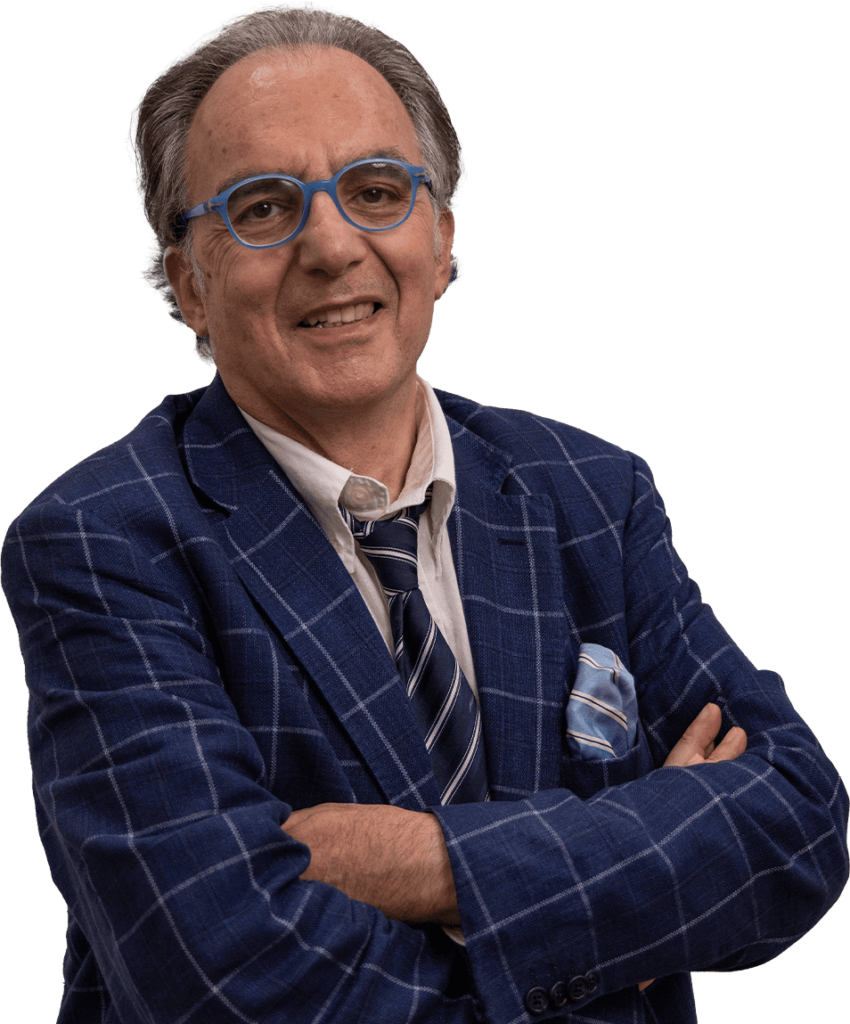
A graduate in Art History, he is a full professor at the Academy of Fine Arts in Rome. Having held fellowships at the Warburg and Courtauld Institute and the British Library in London, he has taught Iconology for the specialist course in the History of Medieval and Modern Art at L.U.M.S.A. University in Palermo and Contemporary Art at the Faculty of Architecture of La Sapienza University in Rome (Valle Giulia campus). He has authored over 200 publications, including scientific texts, encyclopaedia entries, popular articles and books, which have been translated into English, French, German, Polish, Russian, Japanese and Korean. Having curated successful exhibitions, such as Escher, he published his latest book, Bosch. Tavole di diverse bizarrie, with Giunti Gruppo Editoriale. Plates of Various Bizarre Scenes. He is a Knight of the Italian Republic for artistic and scientific merit.
Three-year course programme:
Year 1. Theory of proportions, osteology, arthrology, history of the human figure up to the 16th century. Practical exercises using a live model and a skeletal model.
Year 2. Myology, integuments, history of the human image from the 17th to the 20th century. Between art and anatomy: a journey from head to toe through works of art. Practical exercises with a live model. Drawing and detailed study of the reproductions held in the Gipsoteca of La Sapienza University in Rome.
Two-year course programme:
For each year of the two-year specialisation programme, the course involves the development of an artistic theme, which varies from year to year and is structured around anatomical principles, with dedicated field trips and life drawing of the most important works of art held in Italian museums and the Vatican State. The themes and methods will be announced on a case-by-case basis at the start of each academic year.
The first year of the two-year programme is also open to students wishing to add the third year of the three-year programme.
Single-year option for Fashion and Design:
The course programme includes the joint, but simplified, teaching of osteological, arthrological and myological topics, with a particular focus on the specific themes of fashion and design in relation to the study of the body. In both cases, the anatomical dimension serves as a source of inspiration for these two fields of artistic research. The aim of the course will be to highlight its significance.
Recommended reading:
M. Bussagli, Artistic Anatomy. Drawing Manual. The Body in Art. Le ossa e i muscoli. Le proporzioni, Giunti, Florence, 1996, reprinted 1998, reprinted 2001. Le proporzioni, Giunti, Florence, 1996, reprint 1998, reprint 2001.
M. Bussagli, Sotto pelle, Medusa, Milan 2003.
M. Bussagli, Il Corpo umano. Anatomy and Symbolic Meanings, Electa, Milan, 2005. Electa, Milan 2005.
M. Bussagli, L’uomo nello spazio. L’architettura e il corpo umano, Medusa, Milan 2005.
Other specific texts will be announced on a case-by-case basis.